Still hammering around on your round-tubed road bike with shallow rims? Thinking of splashing some cash and wondering if a fast bike will make you faster? Will it even make ANY difference at all? Well read on my friends, because here is my 100% definitive* guide to aero road bike gains!

RELATED: How does the average roadie compare to a pro cyclist?
For your reading pleasure, I put two of my bikes through their paces around a local test/training loop. To keep it as consistent as possible I rode on two consecutive days, around the same time of day, where the weather was almost identical. Sunny, 15 degrees C and a light but noticeably annoying headwind on the outward leg. I wore the same kit both days (I washed it in between I promise) and there was no drafting involved from other riders or vehicles.
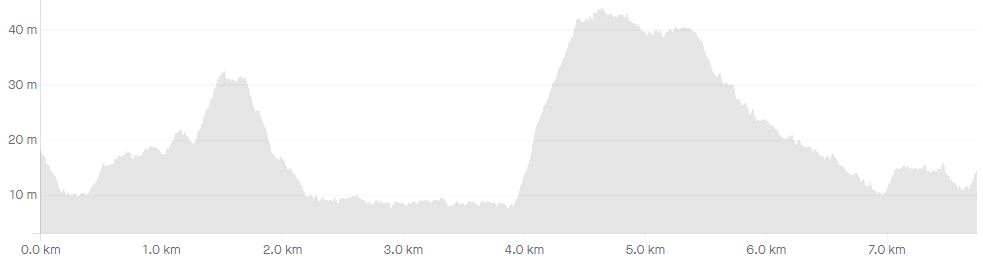
My local tester is the local “Bakery Loop” segment on Strava, a 7.75km / 4.8 mile undulating loop starting and finishing from the bakery. There are only two intersections and you rarely need to stop. It’s a good mix of rollers, flat, a downhill chicane and one longer “drag” that can really sap your speed. Often I’ll rack up multiple loops over the course of a training ride.
According to Strava, I’ve ridden this loop over 300 350 400 500 600 times and I sit at fifth third FIRST on the Strava leader board. That KOM is finally mine, baby!
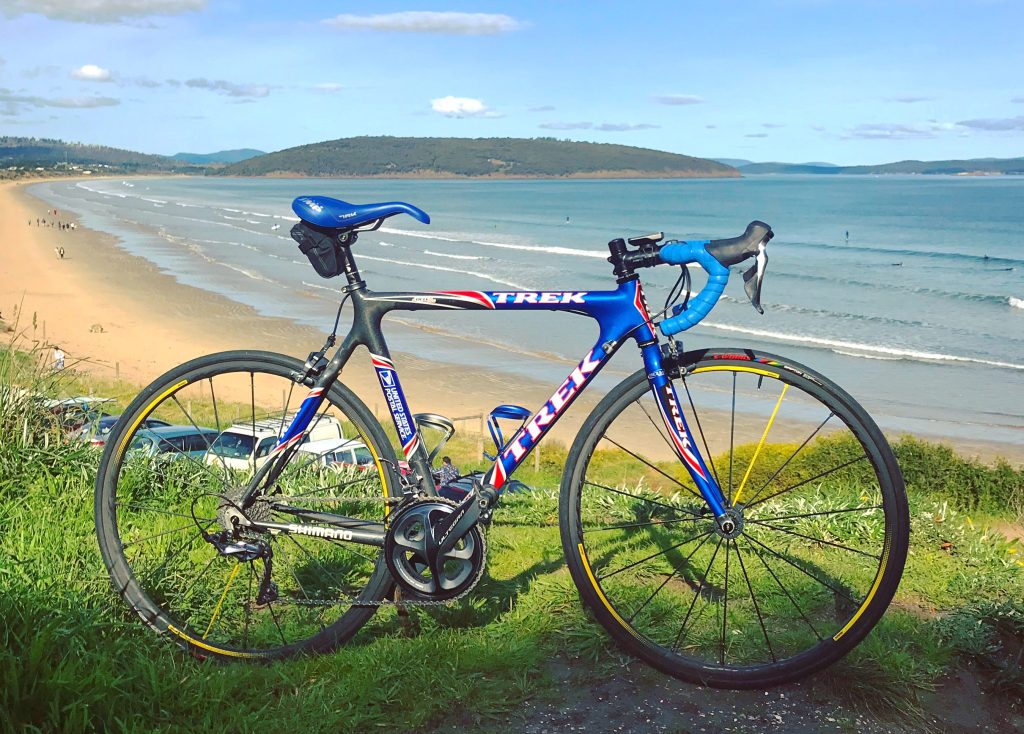
Test Day 1: Regular Bike
For the first outing, I rode my completely un-aero Trek 5200. This bike has lightweight shallow wheels, standard tube shapes and no real aerodynamic parts. It’s still an awesome bike and I still ride in a fast and aggressive riding position, but it just wasn’t designed with aero in mind. Even being the aerodynamic brick it is, it’s no slouch and I love riding it.
Test Day 2: Aero bike!
For comparison on day two I took my Canyon Aeroad for a crack! This machine is about as aero as it gets and leaves me with NO excuses. Okay, so it’s one generation behind the current crop of pro frames, but it feels damn fast. Aero shaped tubes, aero cockpit, deep 62mm carbon wheels, hidden cabling, rim brakes because slowing down is for losers.
Sexy AF and puts me in a powerful yet aggressive riding position. This thing was built for SPEED!

I tried to ride the course as consistently as possible, pacing it the same each time (push a little harder on the climbs, ease on the descents). I wasn’t going full gas, but I still put in a decent effort.. That’s around 3.0w/kg for me. Power was recorded using Assioma Duo dual-sided powermeter pedals that I switched between bikes and calibrated before each ride. For “street science” this is as good as it gets. So onto the results!
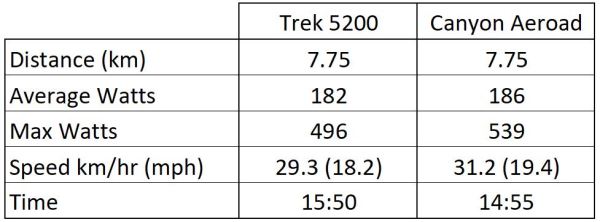
What can we conclude from the data? Over the loop I averaged 182 watts on the Trek and 186 on the Canyon, a difference of only 4 watts. You’ll notice the max wattage number was higher on the Canyon loop, this is because I had to slow at a junction for a car, then crank it to get back up to speed. It definitely cost me time. That said…
With almost identical power, I was 55 seconds faster on the aero bike!
I lapped the course with a 1.9 km/hr higher average speed (1.2 mph quicker). Winner, winner, chicken dinner! The aero bike kills it without a doubt! For the UK club riders out there, that’s almost a 2 minute saving on your evening club 10-mile time trial for no extra effort!
But is it all about the bike? Well, no. Not all the speed is down to the bike itself. The wind tunnel tested aero shaped tubes and deep section wheels definitely help, but it’s not the entire reason for the gains. Part of the speed increase comes from a more aerodynamic riding position. The Canyon Aeroad’s drop bars are narrower which reduces frontal area. It also has slightly more saddle to bar drop. If I could get lower and narrower on the Trek, that would close the speed gap considerably.
Still, there’s no arguing that the aero bike is faster. Using my back-of-a-napkin quick maths to extrapolate that out to a metric century and you’re shaving about 12 minutes off your ride time. If speed matters to you, get your credit card out and get yourself in the saddle of an aero road bike!
Another big question! How does the average roadie compare to a pro cyclist?
#aeroiseverything
A few final interesting things to note…
- Rolling resistance; the Canyon has new Conti GP5000 tyres and the Trek is on Specialized S-WORKS Turbo tyres. Both super fast rubber, but different rubber nonetheless.
- The back straight is the fastest section of the course. On the Canyon I was 4km/hr faster for the same power over the 2km segment (35.9km/hr vs 39.9km/hr). The faster you go, the more aerodynamics matter.
- The Trek and Canyon are almost identical in weight! There’s a short 6% out of the saddle power climb on the way home which I hit at 301 watts both days. Both bikes did it within 1 second of each other.
And very finally, YOU are the biggest source of wind resistance on a bike! If your body is *ahem* not a very aero shaped, losing some excess weight can drastically reduce your aerodynamic drag. A good bike fit and tight, well fitting cycling kit can also work wonders.
* Totally not definitive, unscientific, non peer reviewed amateur case study.
 Two Wheels with TC
Maybe my math is off… but your numbers show you exerted 2% more effort (based on watts/power) on the aero bike. What power meter did you use for the bikes, was it the same Powertap hub? Most power meters state they have +/- 1.5 to 2% variance, which puts your test within the margin of error.
Looking forward to perusing your blog to see if there’s an update. Congrats on having an article that still trends in the top 10 of Google in 2024!
LikeLiked by 1 person
Thanks for the comment! 🙂 It’s been a popular article of mine that’s for sure. I used the same set of Favero Assioma Duo pedals for all the tests. I’ve been meaning to get out and do an update on this to include a time trial bike, but I never seem to get an ideal weather day to perform all the tests.
LikeLike
I would like to see a test result for Trek bike equipped with DT Swiss wheels
LikeLiked by 1 person
I don’t have a definitive test with the same methodology, but I have ridden the “Trek + DT Swiss” combo quite a lot since, and it cuts the speed difference down SIGNIFICANTLY!
LikeLike